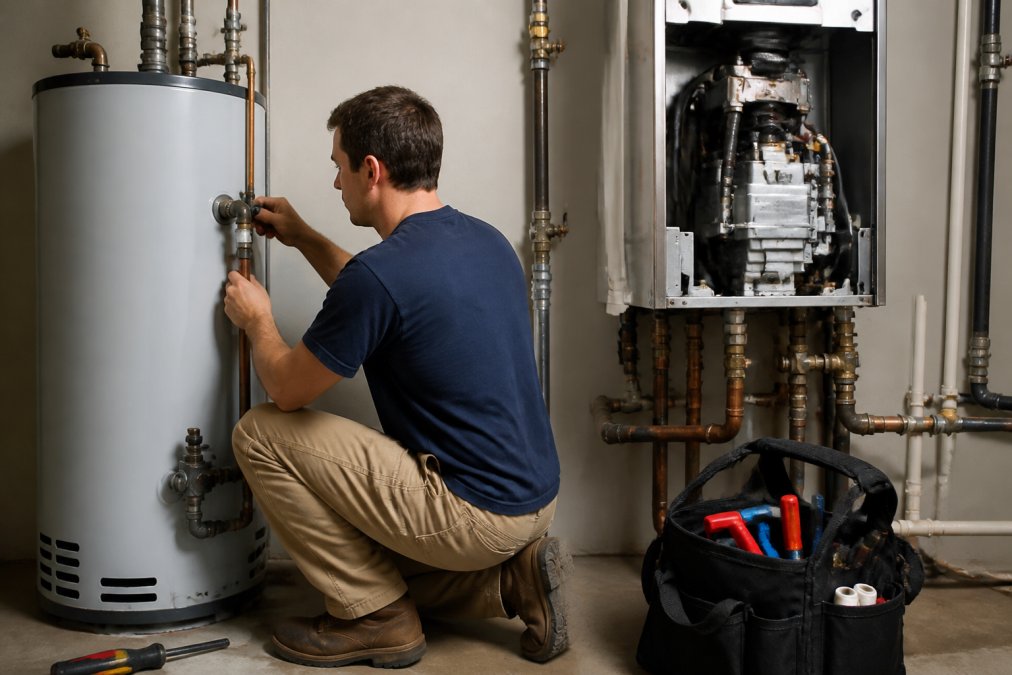
 comparison
Tankless vs Tank Water Heater Maintenance: Full Guide
Table of Contents
- Comparing Maintenance Demands: Tankless vs. Tank
- Annual Maintenance Requirements: A Head-to-Head Look
- Tankless Water Heater Flushing Frequency and Descaling
- Traditional Water Heater Anode Rod Replacement and Tank Care
- Spotting Water Heater Sediment Buildup Symptoms
- Cost of Ownership: Maintenance Expenses Compared
- DIY Maintenance vs. Professional Service: What to Choose
- Conclusion: Matching Maintenance to Your Home
- Frequently Asked Questions
Last Updated: September 9, 2026
Comparing Maintenance Demands: Tankless vs. Tank
Choosing between a tankless water heater and a traditional tank model often comes down to energy efficiency and space, but the real long-term differentiator is maintenance. Tankless water heater vs tank maintenance requirements differ significantly: tankless units demand annual descaling to protect the heat exchanger, while tank units require periodic anode rod replacement and tank flushing. Understanding water heater maintenance before you buy is the best way to avoid premature failure.
The difference in maintenance stems from how each system operates. A tankless unit heats water on demand through a narrow heat exchanger, making it vulnerable to scale accumulation and mineral deposits that restrict flow rate. A tank system stores water constantly, which invites sediment buildup at the bottom and corrosion over time. Neither approach is maintenance-free, but the type of care required shapes the total cost of ownership over the unit's service life.
Annual Maintenance Requirements: A Head-to-Head Look
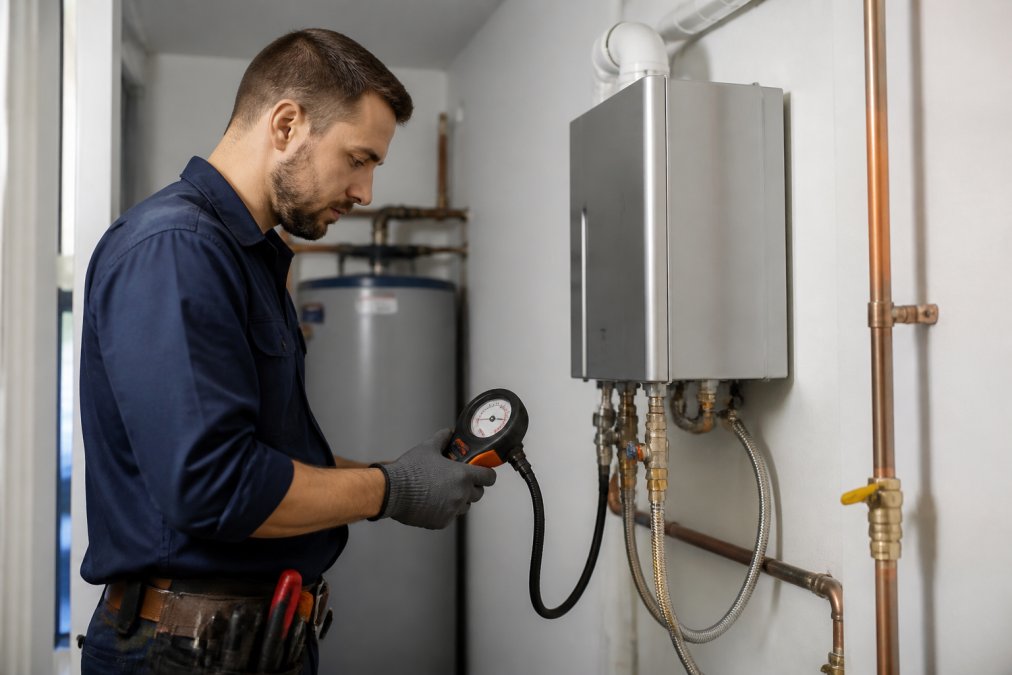
Both systems need attention roughly once a year, but the tasks could not be more different. Tankless water heaters require a vinegar flush or professional descaling to remove mineral deposits from the heat exchanger, a process that protects thermal efficiency and prevents performance degradation. Tank water heaters need an annual flushing of the tank to clear sediment buildup, plus a visual inspection of the anode rod and venting components.
The table below summarizes the core annual tasks for each system type:
| Maintenance Task | Tankless Unit | Tank Unit |
|---|---|---|
| Primary task | Descaling heat exchanger | Flushing sediment from tank |
| Frequency | Annually, more often in hard water | Annually |
| Key component check | Heat exchanger, flow rate | Anode rod, burner, venting |
| Typical difficulty | Moderate, needs pump and solution | Simpler, but heavy water volume |
| Consequence of skipping | Scale buildup, efficiency loss | Corrosion, tank failure and leaks |
Tankless Water Heater Flushing Frequency and Descaling
Determining the right flushing frequency for your tankless unit isn't a one-size-fits-all calculation; it's a direct function of your local water's hardness. Most manufacturers base their warranty on documented descaling, but the interval they suggest, typically annually, is a baseline for average water quality. In regions with hard water, that schedule is insufficient.
How to Determine Your Local Water Hardness
Before you set a maintenance calendar, you need a specific number: your water's grains per gallon (gpg) or parts per million (ppm) of calcium carbonate. You can find this data in your municipal water quality report (often published online annually), or you can use a simple home test strip kit, which costs between $10 and $20 at a local hardware store. The U.S. Geological Survey classifies water hardness as follows: (usgs.gov)
- Soft: Less than 1 gpg (17 ppm)
- Moderately Hard: 1 to 3.5 gpg (17-60 ppm)
- Hard: 3.5 to 7 gpg (60-120 ppm)
- Very Hard: Over 7 gpg (120+ ppm)
For homes in the 'Hard' or 'Very Hard' categories, a common pattern among service technicians is to recommend a descale every six months, not annually. If your water supply comes from a private well, you should test it at least once a year, as mineral content can fluctuate with seasonal changes and groundwater shifts.
The Descaling Process: What It Actually Involves
The descaling process itself is not a simple 'pour and flush' operation. It requires isolating the unit from your home's water supply, connecting a submersible pump to the service ports, and circulating a descaling solution, typically white vinegar or a food-grade citric acid solution, through the heat exchanger for 45 to 90 minutes. The solution dissolves the calcium and magnesium scale that restricts flow and insulates the heat exchanger from the burner.
A common DIY mistake is using a pump that doesn't provide adequate flow rate, which fails to fully circulate the solution through the entire coil. Professional-grade pumps are calibrated to match the unit's specifications. After the descale, the system must be thoroughly flushed with clean water to remove any residual acid, which, if left in the system, can corrode internal brass and copper fittings over time.
The Regional Variable: Why Your Neighbor's Schedule Doesn't Apply
A homeowner in a soft-water municipality like Boston or Seattle might genuinely get away with a descale every 18 to 24 months, though manufacturers still recommend annual service to catch other issues. Conversely, a home in the Southwest or Midwest, where groundwater is notoriously hard, may need descaling as frequently as every three to four months to maintain peak flow rates. This is why the 'annual' rule of thumb is misleading. The true interval is dictated by your specific water chemistry, your household's hot water usage volume, and the unit's incoming water temperature. Colder incoming water requires more energy to heat, which accelerates the precipitation of minerals onto the heat exchanger surface.
A practical approach is to establish a baseline: after a professional descale, measure the hot water flow rate at your highest-volume fixture (usually the shower) with a simple bucket and stopwatch. If that flow rate drops by more than 15% before your next scheduled maintenance, you know your interval is too long and scale is forming faster than expected.
Traditional Water Heater Anode Rod Replacement and Tank Care
Traditional water heater anode rod replacement is the single most important task for extending a tank unit's lifespan. The anode rod is a sacrificial metal component that attracts corrosive elements, protecting the steel tank lining. Once the rod is consumed, corrosion attacks the tank walls directly, leading to leaks and eventual failure.
The rod should be inspected annually and typically replaced every three to five years, depending on water chemistry. Homes with hard water or high chloride content will consume rods faster. Alongside anode rod care, annual flushing removes sediment buildup that insulates the water from the burner, forcing the system to work harder and reducing energy efficiency. This preventative maintenance is straightforward for a professional, but the heavy lifting and risk of damaging the tank make it a poor choice for most DIY maintenance attempts.
Spotting Water Heater Sediment Buildup Symptoms
Water heater sediment buildup symptoms are easy to miss until the system fails. The most common warning signs include popping or rumbling noises from the tank, which occurs when trapped water boils beneath layers of mineral deposits. Reduced hot water capacity, longer recovery times, and discolored water are also strong indicators that flushing is overdue.
For tankless units, the symptoms differ. A declining flow rate at the tap, fluctuating water temperatures, or an error code on the digital display often points to scale accumulation. Many modern tankless models include advanced diagnostic controls that track maintenance intervals and alert you to potential issues. Catching these warning signs early prevents minor issues from escalating into costly repairs or full system replacement.
Cost of Ownership: Maintenance Expenses Compared
The cost of ownership for a water heater extends far beyond the purchase price. Tankless units typically carry a higher upfront cost but offer a longer lifespan, often exceeding 20 years with proper care. Tank models are less expensive to install, but their shorter lifespan of 8 to 12 years means more frequent replacements and a higher risk of water damage from tank failure (homedepot.com).
Maintenance expenses reflect the complexity of each system. Tankless units generally require professional descaling, which involves specialized equipment and labor. Tank units need periodic anode rod replacement, a relatively inexpensive part, but the labor and water volume involved in flushing can add up. The key factor in both cases is consistency: regular preventative maintenance extends service life and protects your investment far more effectively than reacting to failures after they occur.
DIY Maintenance vs. Professional Service: What to Choose
The decision to tackle water heater maintenance yourself or hire a professional isn't just about skill level, it's a direct cost-benefit calculation. Here's a realistic breakdown of what each path involves and where the real risks lie.
The DIY Cost Breakdown: What You'll Need to Buy
For a tankless unit, a DIY descaling kit is your primary option. A basic kit, which includes a submersible pump, two hoses with quick-connect fittings, and a bucket, typically costs between $60 and $120 from a plumbing supply house or online retailer. The descaling solution itself, either a gallon of liquid descaler or a citric acid powder, adds another $15 to $30 per flush. If you already own a drill pump or a sump pump, you can assemble a makeshift setup for less, but the risk of an inadequate flow rate increases.
For a tank unit, the DIY cost is lower. A replacement anode rod costs between $30 and $60 depending on whether you need a standard magnesium rod or an aluminum/zinc alloy version for hard water. A socket wrench and a breaker bar are standard household tools, though you may need to rent a heavy-duty impact wrench from a local tool rental center for roughly $25 per day to break loose a corroded rod.
The Professional Service Cost Breakdown
Professional service calls are priced by the task, not the hour, in most markets. A standard tankless descaling service includes the technician's labor, the descaling solution, and the use of a commercial-grade pump. A tank flush and anode rod inspection is also available. If the anode rod needs replacement, there will be an additional cost for the part and labor. Pricing depends on the specific services required; please contact us for a quote.
The math becomes clear when you compare long-term costs. A DIY tankless descaling kit can be a cost-effective option. However, the hidden cost is the risk of error. A mistake in valve sequencing can send air into the heat exchanger, causing the burner to overheat and warp the coils, a repair that can be costly. Similarly, a DIY anode rod replacement on a tank unit carries the risk of cross-threading the new rod into the tank's threaded opening, which can create a leak that requires tank replacement.
The Decision Framework: When to DIY, When to Call
A practical rule of thumb used by many service professionals is this: DIY the descaling or flushing if you are comfortable following a manufacturer's service video and you have basic mechanical aptitude. But always call a professional for the first service on a new unit. This serves two purposes: it establishes a documented maintenance record for your warranty, and it gives you a baseline reference for what a properly serviced unit looks and sounds like.
For gas units, the calculus shifts. Any maintenance that requires disassembling the combustion chamber, inspecting the burner assembly, or testing the venting system should be left to a licensed technician. Carbon monoxide leaks from improper reassembly are a life-safety hazard, not a cost-saving opportunity (the CDC). Most municipalities require a licensed plumber or HVAC technician to perform work on gas-fired appliances, and attempting it yourself can void your homeowner's insurance coverage in the event of a fire or leak.
The Hidden Cost of Skipping Maintenance Altogether
To frame the decision, consider the cost of inaction. A tankless heat exchanger replacement can be a significant expense, including parts and labor. A tank water heater that fails from a corroded anode rod requires full replacement. Compare that to the annual professional service cost, and the maintenance expense represents a fraction of the replacement cost per year. Skipping maintenance to save money annually is a bet against a costly failure that has a high probability of occurring within the unit's expected lifespan in hard water conditions.
Conclusion: Matching Maintenance to Your Home
The right water heater depends on your willingness to commit to its care. A tankless unit rewards diligent annual descaling with a longer lifespan and better energy efficiency, while a tank model offers simpler maintenance but a shorter service life. Homes with hard water will face more demanding requirements for either system, so check your local water quality before deciding.
Water Heater Express LLC serves Beacon, NY and the surrounding Hudson Valley with expert installation, repair, and maintenance for all water heater types, including gas, electric, and hybrid models. Our certified technicians extend your system's lifespan through professional maintenance, and we also offer whole-house filtration solutions to reduce mineral buildup at the source. Get started with Water Heater Express LLC and book your service online today.
Frequently Asked Questions
Do tankless water heaters require more maintenance than traditional tanks?
Yes, tankless units need more consistent, specialized care. The main task is annual descaling to prevent mineral deposits from clogging the heat exchanger, especially if you have hard water. Tank heaters have simpler mechanical needs, but they require periodic flushing and anode rod replacement to prevent corrosion and extend lifespan. While tankless maintenance is more technical, it is not necessarily more time-consuming. The key difference is that neglecting a tankless unit leads to faster performance degradation, while a neglected tank risks leaking and potential water damage.
How often should I flush my tankless water heater?
Most manufacturers recommend a vinegar flush at least once per year. If your home has hard water, you should increase the frequency to every six months. Flushing removes scale accumulation from the heat exchanger, which protects energy efficiency and maintains flow rate. Skipping this step can void your warranty. You can learn the simple DIY process or hire a professional. The task involves connecting a pump with a descaling solution to the service ports, circulating it, and rinsing the system clean.
What are the signs of sediment buildup in a tank water heater?
Listen for popping, rumbling, or banging noises coming from the tank, which happens when water boils beneath sediment layers. You may also notice reduced hot water output, longer recovery times, or rusty or cloudy water from the hot tap. These symptoms indicate mineral deposits have accumulated at the bottom of the tank. Flushing the tank annually helps remove sediment. Ignoring it forces the burner to work harder, reducing efficiency and potentially leading to premature tank failure.
What is an anode rod and why is replacement important for tank heaters?
An anode rod is a sacrificial metal core inside a tank heater that attracts corrosive elements in the water, protecting the steel tank lining. Over time, the rod degrades and becomes ineffective. You should inspect it annually and replace it every 3 to 5 years, or more often if you have hard water. A depleted rod leaves the tank vulnerable to corrosion and leaks. Replacing it is a low-cost, preventative maintenance task that can significantly extend the lifespan of your traditional water heater.